
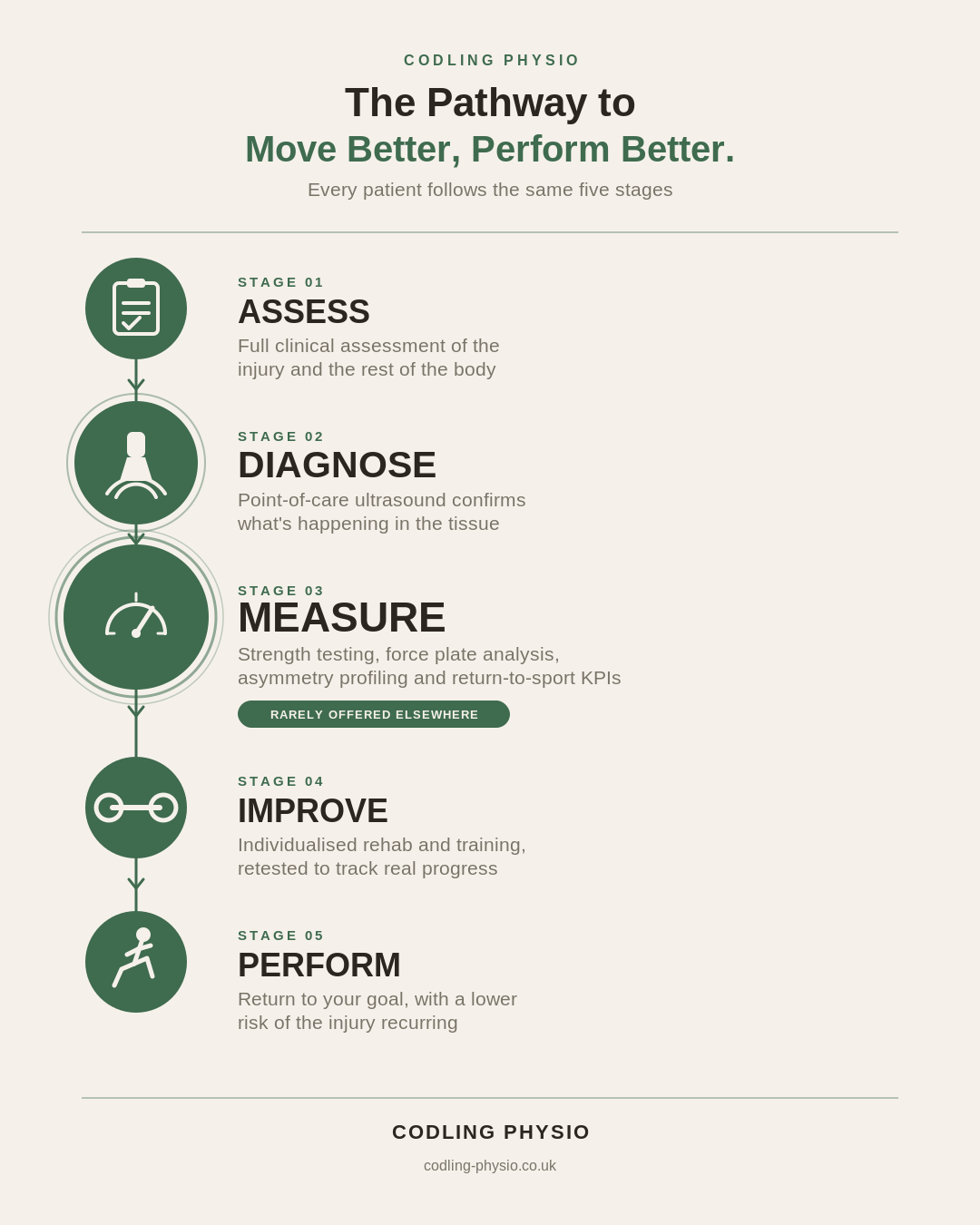
Every treatment plan follows the same five stages
Whether you’re dealing with pain that’s lasted months, or training for a personal best, every patient goes through the same structured pathway — not because it’s a slogan, but because it’s how a diagnosis actually gets made properly.
Assess — a full clinical assessment of the injury and how the rest of your body is involved, not just where it hurts.
Diagnose — point-of-care ultrasound where relevant, so treatment starts from a confirmed diagnosis, not a guess. In practice, that means a quick in-clinic scan of the tendon, muscle or joint in question during your first visit — not a separate appointment weeks later.
Measure — strength testing, force plate analysis, asymmetry profiling and return-to-sport KPIs. Very few private physio clinics can offer this stage at all — it’s the clearest evidence that treatment here isn’t based on guesswork. Force plate testing itself takes about 15 minutes and measures things a stopwatch can’t: how much power each leg produces, how symmetrical that is side to side, and whether you’re actually ready for full training load or still compensating.
Improve — an individualised treatment and rehab plan built around what Assess, Diagnose and Measure actually found, then retested against your Measure baseline so progress is shown, not assumed.
Perform — return to your goal, whatever that is, with a plan to keep the injury from coming back.